
Telecom Company Website Design and Development
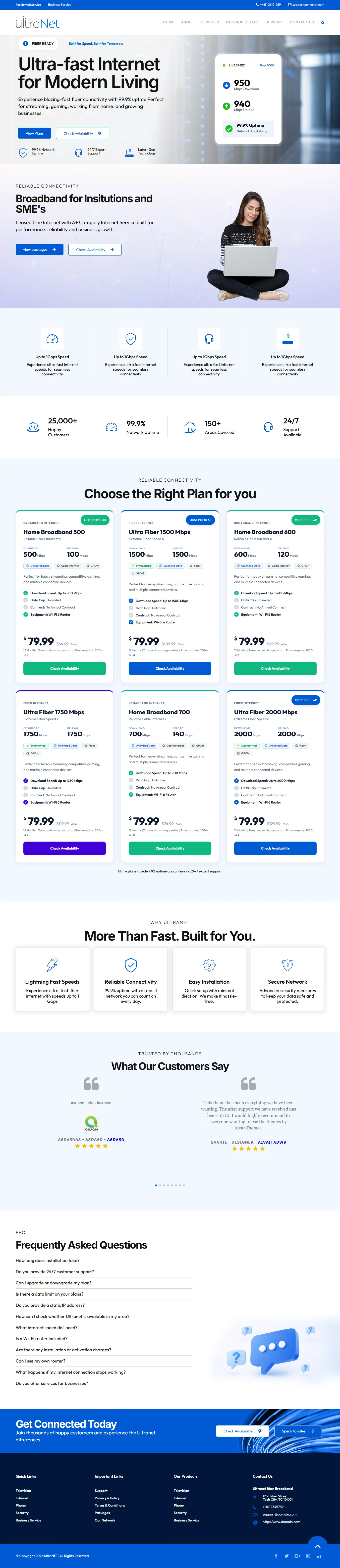
Get a professional telecom company website designed and developed to showcase communication services, network solutions, and connectivity plans. Make it easier for customers to explore your offerings, compare packages, and contact your team.
Standard
What's Included
Available Add-ons
Telecom Company Website Design and Development That Helps Customers Choose and Connect
Customers need to understand what your telecom company offers before they can choose a service. Your website should help them explore their options and reach the right team. Behind those pages, it also needs to support the sales and service tasks involved at each step.
The Custom Websites provides Telecom Company Website Design and Development for telecommunications businesses serving residential customers or business clients, including companies that serve both. We design professional interfaces and build the functions behind service inquiries and customer resources, with compatible account connections where needed.
Your services might include broadband or business telephony. You may provide fiber connectivity or managed communications. We build around what you actually offer. Depending on your requirements and available systems, the scope can include coverage checks and customer portals, plus optional AI features.
A Website That Supports New and Existing Customers
Someone choosing a service needs different information from someone checking an existing account. Business buyers may need a longer conversation, especially when several locations or specific connectivity requirements are involved.
Our Telecom Website Design and Development Services plan for those differences. Each audience gets a clear entry point. We then develop the forms and content tools behind those routes, along with the account functions needed to support them.
You may need a public company website or a connected customer portal. The scope can also focus on improving a platform you already use.
Telecom Company Website Design Services
Our Telecom Company Website Design Services address how customers see your company and find their way through its services. Before development starts, we plan the layouts and visual hierarchy. Branding and navigation are part of that work too.
Technical information should be understandable. But the conditions attached to a service still need to be visible. Every page should have a clear purpose and give visitors an appropriate next step.
Custom Telecom Website UI/UX Design
Before detailed visual design begins, we map what visitors need to do, from exploring a service to finding support.
Wireframes show the page structure and how those routes connect. Your team can review the proposed User Interface (UI) and User Experience (UX) at this stage.
Telecom Homepage and Service Discovery Design
Your homepage needs to introduce the company and point people toward relevant services. Residential offers and business solutions need clear visual priorities, alongside customer support.
We design the layout so visitors can choose where to go without reading through every offering on the first screen.
Telecom Service and Product Page Design
Visitors should understand what a service includes before they request a quote or check availability. We design individual service pages with that order in mind.
Descriptions and specifications have their own places in the layout. Supporting information stays distinct too, making the page easier to follow.
Plan Comparison and Offer Presentation Design
We design comparison layouts around your approved plans and packages. Prices and included features need clear labels, as do contract terms and relevant conditions.
Important details get enough space to be seen. Customers need that information to make an informed decision.
Responsive Telecom Company Website Design
An address form needs to work comfortably on a phone as well as a desktop. Comparison tables and support menus need practical layouts at each screen size too.
We design for mobile phones and tablets, alongside desktop screens. On mobile, readable content and usable controls come first.
Telecom Branding and Corporate Website Design
Company information should feel connected to your commercial service pages. We apply your visual identity through consistent colors and typography, with matching imagery and interface styles.
Reusable design patterns give future pages a recognizable place within the website.
Customer Navigation and Accessible Interface Design
Menus follow customer goals. Someone may need to find a service or request help, while another visitor needs account access. Forms get clear labels and instructions.
Accessible design work considers suitable contrast and visible interaction states. Feedback should be easy to understand too.
Telecom Company Website Development Services
Our Telecom Company Website Development Services make approved layouts work as pages and customer functions. We develop front-end code and back-end processing, with content management tools. Compatible business system connections can also form part of the scope.
First, we define how information should pass between the website and your operational platforms. That gives us practical requirements for inquiries and account access. It also establishes how service requests should work.
Custom Telecommunications Website Development
Your agreed business requirements determine what we develop. That may include service inquiry routes or location-based content, along with structured quote requests.
Administrative tools give authorized staff control over the functions and information included in scope.
Telecom Website Front-End Development
We turn the approved interface into working browser pages. That means coding navigation and forms, then comparison controls and interactive page components.
Responsive behavior and keyboard access are included. Users also need clear feedback when they complete an action.
Back-End Development and Database Management
Server-side functions process submissions and manage the website’s records. Validation checks help reject information that’s incomplete or invalid.
We define database structures and access rules for storing records. Those rules also control how records are updated and retrieved.
Telecom Website CMS Development
A Content Management System (CMS) gives your team a way to maintain service pages and company information, along with resources.
Structured fields can keep plan descriptions and specifications consistent. Publishing permissions determine who can edit information and who can approve changes.
Coverage and Address Qualification Integration
We assess an approved coverage source or service qualification API before planning the connection. Development can handle address lookup and requests, then present the results.
The underlying data determines how accurate and detailed those results can be. Provider capabilities set limits too.
Customer Account Portal Development
Private account functions follow the customer tasks you’ve approved. Customers may need service details or documents, or a way to submit requests.
Secure authentication and role-based access control determine what each user can see. They also define which actions that user can take.
CRM, Billing and OSS/BSS Integrations
We assess your Customer Relationship Management (CRM) software and billing platform, plus relevant Operational Support Systems or Business Support Systems (OSS/BSS).
Integration work defines field mapping and permissions, then transfer behavior. Availability depends on provider APIs, licensing and documentation.
Quote and Service Order Workflow Development
A quote submission needs technical steps behind it. We develop those steps and approved ordering routes, which may include validation or internal assignment, plus status notifications.
Direct ordering can only be included once product rules are confirmed and suitable operational connections are available.
Customer Support and Helpdesk Integration
Compatible helpdesk tools can connect with your website’s support functions. The scope may cover ticket creation and request categories, along with approved status updates.
Transfers can fail and external services can become unavailable. Both need defined handling.
Technical Performance and Website Security
Within the agreed scope, we address loading speed and responsiveness, alongside access controls. Work may cover caching or efficient queries, plus encrypted connections and restricted permissions.
Private customer functions also need careful handling of account records and the credentials used by connected systems.
Telecom Website Maintenance and Upgrades
Our website maintenance service can cover agreed software updates and fault resolution, with integration checks. Changes made by providers may require adjustments to connected functions.
New modules and larger upgrades receive a separate assessment before implementation.
Essential Features of a Telecom Company Website
A useful feature answers a customer’s question or helps them complete a task. Which features belong on your website? That depends on the services you offer, how your operations work and the software already in place.
Service Catalog and Plan Information
A service catalog organizes your offerings for customers. Individual pages can explain broadband or telephony, with managed connectivity included where it’s part of your business.
Plan information needs enough detail for people to compare options. Your team supplies approved specifications and pricing, along with the conditions.
Coverage and Availability Requests
Customers can submit an address or service location to check relevant information. A suitable live source may let the website return an availability indication.
If automated checks aren’t available, it can collect a request for staff review. Initial coverage information must stay distinct from a confirmed installation commitment.
Business and Multi-Site Quote Forms
Business forms can gather site locations and requested services, plus relevant operational needs. A multi-site form may let a customer describe several premises in one request.
Your sales team gets useful context before following up. The detailed technical assessment can come after the first conversation.
Account and Billing Access
An account area can give customers approved service records or invoices, as well as billing links. The connected platform determines which actions are available.
Sometimes a secure route to an existing portal makes more sense than duplicating it. That choice should reflect the customer experience and maintenance requirements.
Support Requests and Ticket Updates
A structured support form lets customers explain an issue and identify the service involved. A confirmation message acknowledges that the request was submitted.
Customers may also see ticket progress if a compatible helpdesk supports it. Public forms shouldn’t ask for account passwords or other sensitive credentials.
Installation and Service Request Tracking
Customers can use a tracking feature to see approved stages of an installation or service request. It can show the current status and anything they need to do next.
Updates rely on information from your operational systems. Estimated dates should be clearly separate from confirmed appointments.
Service Status and Maintenance Notices
A status section provides approved incident updates and planned maintenance information. Each notice should identify the affected service and show the latest update time.
The source can be maintained manually or connected to a suitable operational system. Responsibility for publishing needs to be clear.
Contact Routing and Branch Information
Customers need to tell sales contacts apart from billing and technical support. If your company has physical offices, branch pages can show verified location details.
Clear routes reduce uncertainty about where to send a request. Each route should lead to a team or process your business actively supports.
Setup Guides and Product Documentation
A resource library holds approved instructions and service documents. Categories and search controls help users find the material relevant to them.
Version details can show which guidance is current. Private documents should stay behind the appropriate account permissions.
Support Different Stages of the Telecom Customer Journey
Customers may use a telecom company website throughout a long relationship with the business. We can design routes for selected stages of that relationship and develop the functions needed to support them.
Exploring and Comparing Services
We design service routes that explain your offer, then develop the comparison or inquiry functions new customers need.
The content should answer important questions before visitors are asked to submit personal details.
Joining and Arranging Installation
We design clear request steps and develop the approved submission workflows behind them. The website can explain what information customers need to provide and what happens next.
Your operational process determines installation acceptance and scheduling.
Managing Existing Services
Account routes start with the tasks customers are allowed to complete. We design those routes and connect the functions to approved records or systems.
Changes needing staff authorization should stay within a defined review process.
Requesting Changes or Additional Support
We design clear routes for upgrade requests and account questions, alongside support needs. Development handles the agreed forms and routing.
Customers should be told what the action does. Does it submit a request or immediately change a service?
Optional AI Features for Telecom Company Websites
AI can help users find information. It may also assist staff with selected administrative tasks. Each feature needs maintained sources and appropriate data access, with a clear route to human support.
AI Service Information Assistant
An assistant can use approved service information to answer routine questions. It may point visitors toward relevant pages or explain published terminology.
Coverage and pricing mustn’t be invented. The same applies to contract conditions. Account-specific recommendations need confirmation through your approved sales process.
AI-Powered Support Resource Search
Customers can use everyday language to look for relevant guides through AI-assisted search. Responses should point them toward current material your business has approved.
Uncertain troubleshooting questions need a support handoff. Unverified instructions shouldn’t be presented as a confirmed solution.
AI-Assisted Inquiry Summaries
AI can draft a summary of a customer’s submitted request. This may help staff identify the issue described and the service involved.
Your team should be able to correct both the summary and its classification. Urgent incidents need defined handling rather than relying only on an AI suggestion.
AI Assistance Within Customer Accounts
An account-based assistant may help customers find permitted documents or understand routine processes. Its access should follow that user’s account permissions.
Billing disputes and contract changes need an authorized representative, as do service commitments. Customers should know when the assistance is automated.
Responsible AI and Customer Information
AI workflows should use only the data required for an approved purpose. Before private information is involved, review provider handling and retention, along with access settings.
Human oversight helps identify inaccurate responses. Public-facing assistants should stay separate from restricted customer and operational records.
Our Telecom Company Website Design and Development Process
Your service model and the tasks customers need to complete shape the project plan. We keep design decisions connected to technical requirements throughout delivery, so both address the same work.
Company and Service Discovery
We review your audiences and offerings, then discuss the website’s goals. Discovery also identifies existing tools and content responsibilities, plus required account functions.
Those findings establish the proposed scope.
Website Architecture and Journey Planning
We organize the sitemap around service discovery and sales inquiries, with routes to customer support. Wireframes show how the main paths connect.
Your team reviews the structure before detailed design begins.
Interface Design and Review
We create visual layouts for the agreed page types. Reviews check branding and readability, then responsive presentation and accessibility considerations.
The approved designs set the direction for development.
Custom Development and System Connections
We build the pages and content tools, along with approved customer functions. Integration work follows the access available and the agreed information flow.
Your team can check how things behave at defined review points.
Testing and Launch Preparation
We test important forms and account actions, then connected workflows. Within scope, reviews also cover performance and security, plus supported device behavior.
Launch preparation includes approved content and the handover arrangements.
Maintenance and Future Improvements
After launch, support follows the maintenance agreement. Customer questions and feedback from your operational teams can guide further changes.
New functions receive a separate assessment before implementation.
Benefits of Professional Telecom Company Website Design and Development
Clear design helps customers understand the services you offer. Reliable development supports their requests and the processes behind them. Together, they can make the website more useful for sales and customer service.
A clearer company presentation: Consistent layouts help customers understand what your company offers.
They also give your business identity a consistent place across the website.Better-informed sales inquiries: Relevant forms gather useful details from customers.
Your team has that information before follow-up starts.Easier access to customer resources: Organized pages help users find the information they need.
Appropriate account tools give them access to relevant resources too.More consistent request handling: Defined workflows give submissions an agreed route.
They can direct each request toward the appropriate team.Less duplicate administration: Compatible integrations can reduce repeated entry.
Information can pass between systems with less duplicate administration.Manageable content updates: Suitable editing tools help staff maintain plan details and documents.
They can keep company information current through those tools too.Support for future additions: Reusable designs provide room for new services.
Planned architecture can accommodate additional functions as well.
Telecom Company Website Design and Development Solutions
The Custom Websites can scope a complete company website or focus on part of an existing platform. Each solution addresses defined visual requirements or technical needs. Some projects need both.
Corporate Telecom Website Design and Development
For companies needing a complete public website, this solution combines branded page design with custom website development.
We plan the service structure and create the layouts, then build the approved functions.
Business Telecom Website Design and Development
We design routes for business buyers and develop the inquiry tools behind them. The scope may cover multi-site requests or specialist service pages, with consultation routes where needed.
The content follows the services your company actually provides.
Telecom Customer Portal Design and Development
We design the private account experience, then develop the functions customers are permitted to use. These can include records and documents, alongside request tools.
User roles and system access determine what’s available.
Coverage and Service Qualification Development
Where suitable access exists, this solution connects the website with an approved availability source. We define address handling and response behavior, including error states.
The underlying provider determines which service data is available.
Telecom Website Redesign and Modernization
Our telecom website redesign services address outdated presentation and unclear navigation, including customer routes that are difficult to use. Modernization can also improve the CMS and code, along with integrations.
We assess both areas before recommending what to retain or rebuild.
Website Maintenance and Technical Support
Ongoing support can cover agreed updates and faults, plus checks on connected services. Your platform and operational needs determine the scope.
Larger design changes and additional development are planned separately.
Why Choose The Custom Websites for Telecom Company Website Design and Development?
The Custom Websites handles customer-focused website design and technical development within one project approach. We design clear routes through your services. Then we develop the functions behind the customer actions you’ve approved.
Our Telecom Company Website Design and Development Services reflect your actual business requirements and what your available systems can support.
Design Around Customer Needs
We organize layouts around what customers need to understand and do.
Clear navigation and readable service information help visitors find an appropriate next step.
Development Based on Defined Processes
Before implementation, we establish how submissions and records should work, along with account actions.
The functions follow agreed responsibilities and operational rules.
Early Review of Integrations
We assess coverage and billing connections before confirming their scope. CRM and support connections receive the same review.
That helps identify technical dependencies and provider limitations early.
Planning for Ongoing Use
Reusable design patterns help keep updates consistent as the website evolves.
Development decisions also account for security and performance, with maintainability in mind.
Build Your Telecom Company Website with The Custom Websites
Give customers a clear place to explore your company and compare services, with a route to support when they need it. The Custom Websites combines professional website design with custom development for inquiries and account access, alongside compatible business integrations.
Tell us how customers need to use your website and which internal processes it needs to support. We can use those requirements to define the right project scope.
Payment Methods

Chat With Us
(929) 596-6672
Frequently Asked Questions
Choose Your Plan
Flexible options to match your budget and timeline.
Premium
Prefer a Smaller Monthly Payment?
Get a professional website from $69/month with hosting, maintenance and support included.
Related Products

Need a Custom Solution?
Every business is unique. Tell us about your requirements and we'll put together a tailored proposal — at no obligation.
Response in 24 hours
We review every inquiry personally
No commitment needed
Free consultation, zero pressure
Custom pricing
Scaled to your exact requirements
Or reach us directly
Get Your Custom Quote
Free consultation · No obligation